
Understand the ECPL in a few minutes
Find out what the ECPL is for, which vehicles and roads are covered, and how the scheme works.
The 3 key questions
Is my vehicle covered?
The ECPL applies to road vehicles for the carriage of goods weighing more than 3.5 tonnes that use the network managed by the Grand Est Region subject to the Eco-contribution. Some vehicles are, however, exempt.
Check whether my vehicle is coveredWhich roads are covered?
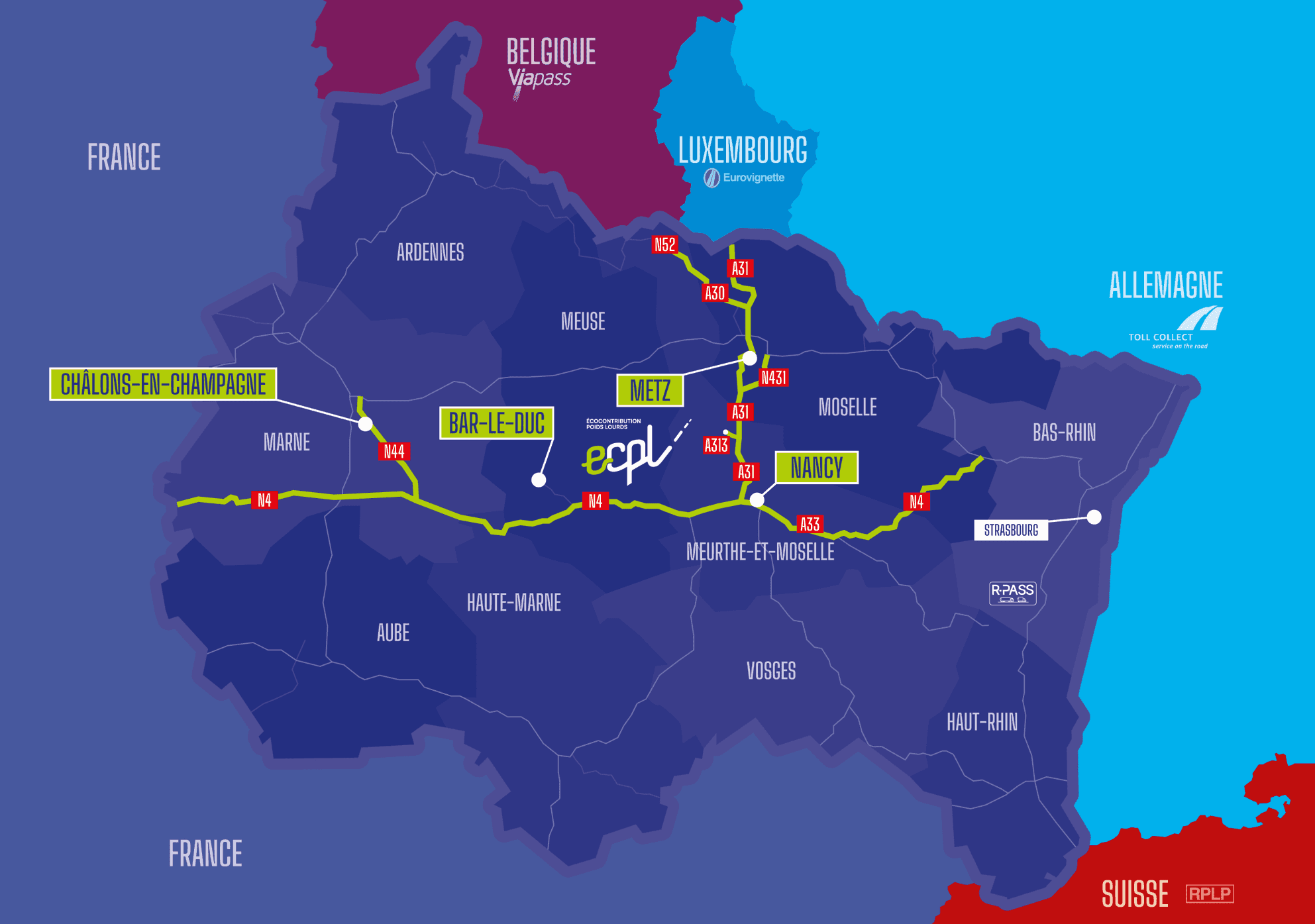
The ECPL does not apply to the entire Grand Est road network. It only covers the sections included in the taxed network.
View the networkFrom when?
The ECPL is scheduled to come into force on 2 April 2027.
Official announcementHow does it work?
Check whether your vehicle and your journey are covered
The category and the gross vehicle weight (GVW) determine whether the tax applies.
Choose your payment solution
Accredited P-SET or ticket.
Drive on the ECPL network
Drive on the ECPL network, making sure that your situation is compliant.
Who does it apply to?
The charge applies to goods vehicles exceeding the weight threshold set by the scheme. Certain categories are exempt because their activity serves the general interest.
The ECPL network
Consult the map to identify the roads covered and check your journey.
Why the ECPL?
- Maintaining and modernising the network
- The ECPL contributes to the sustainable funding of the maintenance, safety improvement and modernisation of the roads managed by the Grand Est Region. In particular, it enables investment in road surfaces, engineering structures and equipment designed to improve safety and traffic conditions.
- Making HGVs contribute to their use of the network
- The routes concerned carry heavy HGV traffic, a significant share of which consists of vehicles from outside the Grand Est region. With the ECPL, their contribution is calculated according to the kilometres travelled on the network subject to the charge and the characteristics of the vehicle.
- Supporting the transition in goods transport
- The ECPL is part of a wider approach aimed at promoting more sustainable goods transport: fleet renewal and decarbonisation, charging and refuelling infrastructure, the development of rail freight and support for economic sectors that are particularly dependent on road transport.